Motion-Activated Intelligence
Built-in sensors can activate lighting and ventilation when a space is occupied and power them down when it is unoccupied.
 India
Acoustics, assembly and comfort. Explore what makes a MUSEPoD work.
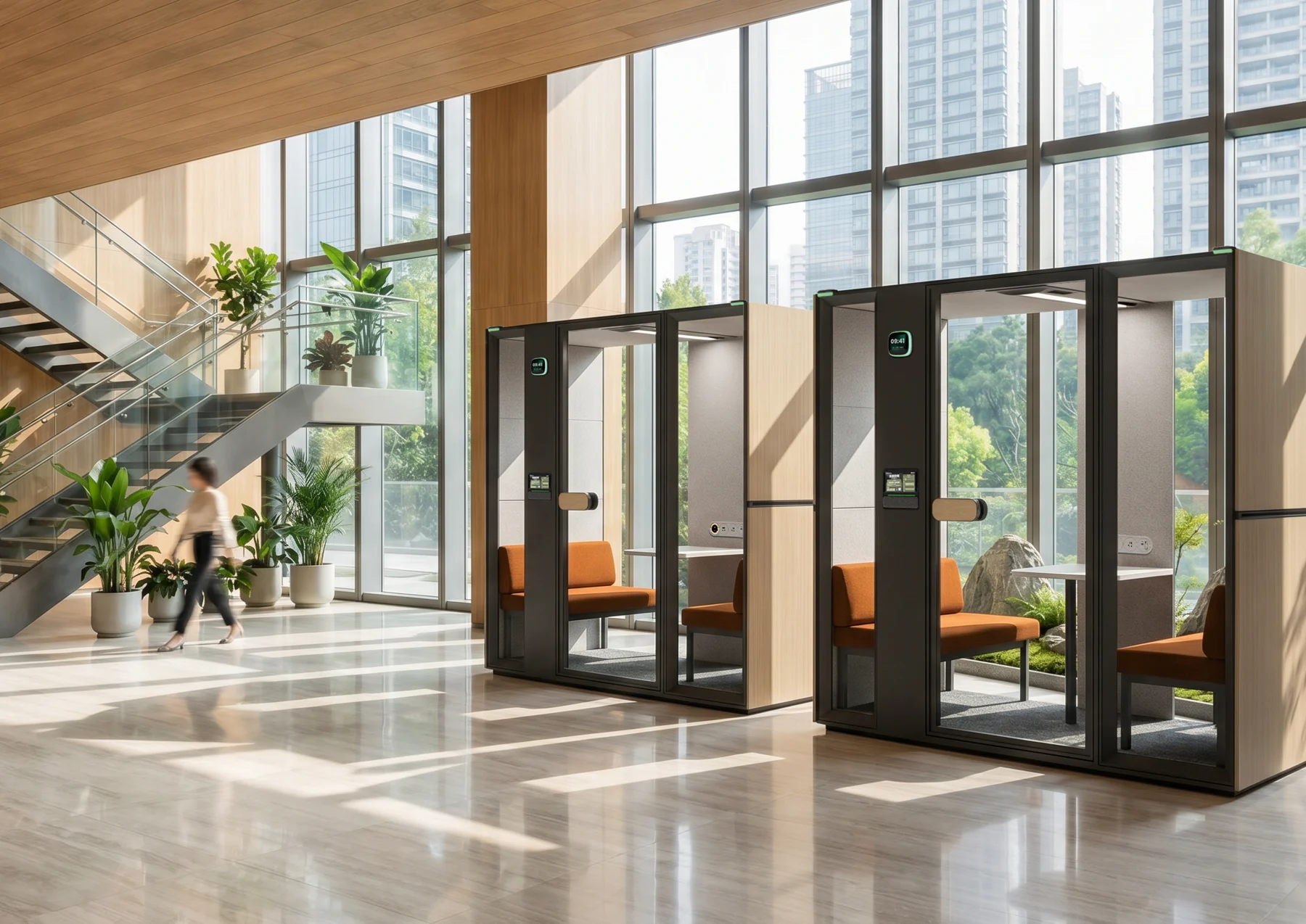
Designed for the working day
Thoughtful details come together to make space for better work.
Built-in sensors can activate lighting and ventilation when a space is occupied and power them down when it is unoccupied.
A considered interior brings together furniture and the essentials for comfortable, productive work. Confirm the furniture included with your chosen model.
Connect the pod to a compatible power outlet for convenient use within your existing workspace. Local electrical requirements depend on the configuration.
Integrated ventilation supports a comfortable working environment. The supplied product information describes air renewal in about 90 seconds; performance varies by model and settings.
Selected MUSEPoD designs feature 3C-certified tempered glass and aviation-grade aluminium for a refined, durable enclosure. Ask for the relevant certification and material details for your model.
Our team can help coordinate professional installation and integration into your workspace. Discuss site access and installation requirements with your quotation.
Selected products use materials including FSC-certified boards and recycled components. Ask for the environmental documentation for your chosen configuration.
Features and included equipment vary by model and configuration.
Sound control, from the inside out.
Layers work together to limit sound transmission, absorb reflections and close the gaps around a private space.
The outer shell and acoustic construction reduce the passage of sound between the pod and its surroundings.
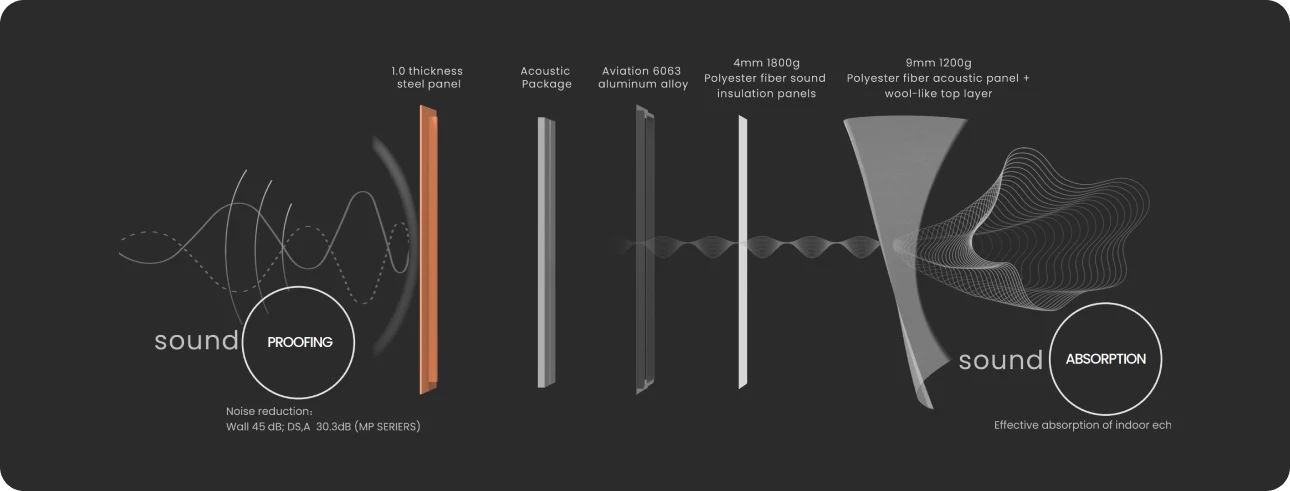
The MP brochure describes Class A acoustic performance tested to ISO 23351-1. Speech level reduction is a test result, rather than a promise of silence in every room.
Read the acoustic referenceWave motion illustrates the principle of sound control; it is not a calibrated acoustic measurement.
Use the report for the exact configuration when privacy is part of your brief.
The MP brochure describes Class A sound insulation tested to ISO 23351-1. The ME brochure also references ISO 23351 Class A. Request the selected model’s report and test conditions before comparing results.
Speech reduction inside an enclosure, absorption within its walls and background noise outside are different questions. A laboratory class does not by itself describe every installed office.
Review door seals, ventilation, furniture and the proposed position together. Ask how the selected configuration is intended to support sensitive conversations in your environment.
Source: MP brochure and ME brochure. Confirm current certificates and scope for the chosen model.
Factory-made components connect on site, with scope to relocate and reconfigure.
Modular construction. Coordinated installation.
MP, ME and MX use collection-specific components. Review the current system, delivery route and local service requirements before agreeing an installation programme.
Prepare your installation brief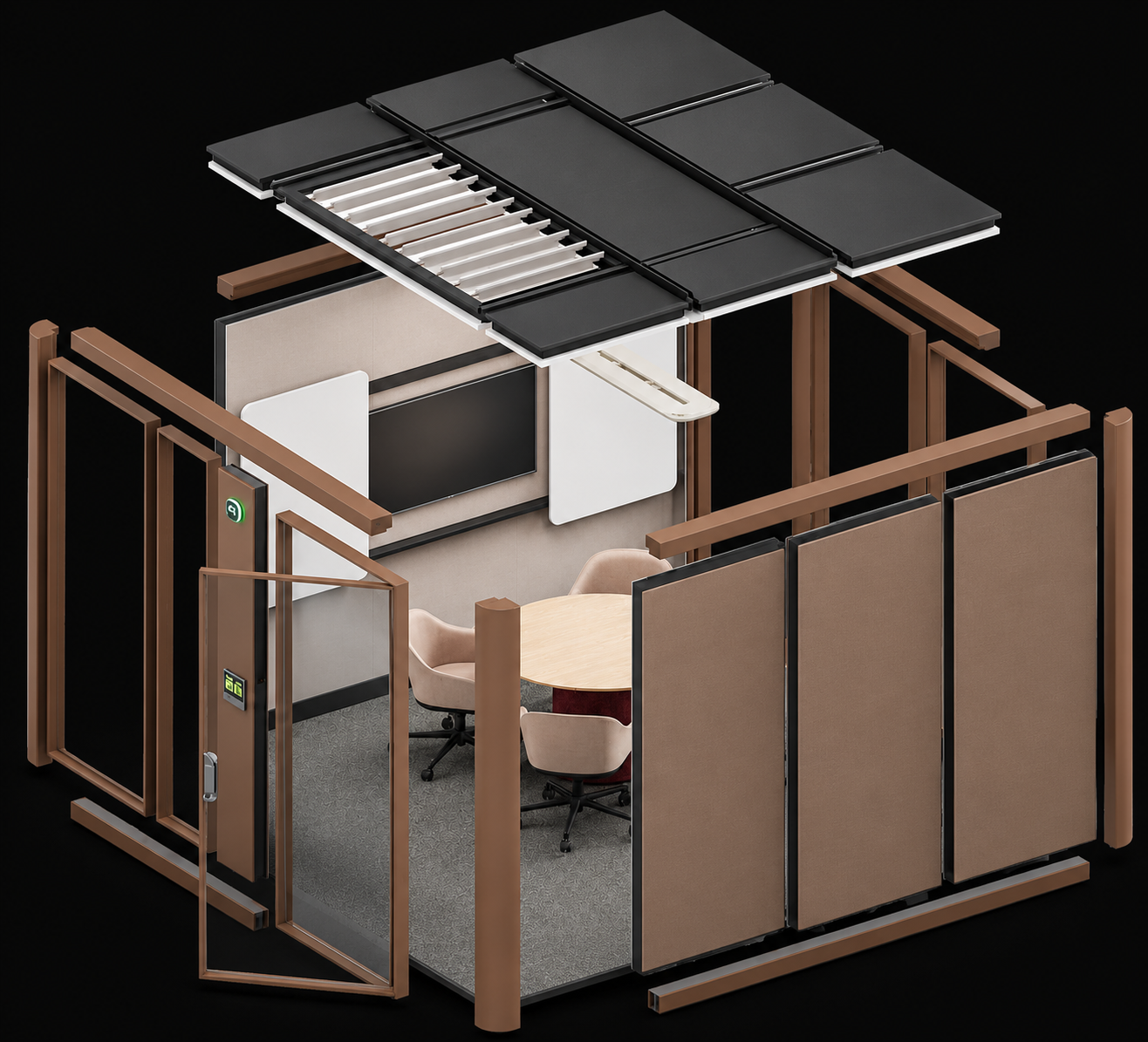
Light, fresh air and connected controls create a space that feels ready when you are.
ME describes full-pod air recirculation in 1–1.5 minutes, with adjustable direction and airflow.
View the specificationMP combines radar sensing with a three-second soft fade-in and a 3000–8000 K lighting range.
View the specificationMP includes a modular outlet system and a 65 W retractable fast-charging cable in the brochure specification.
View the specificationBooking, occupancy indication and back-end management help connect the pod to the working day.
View the specification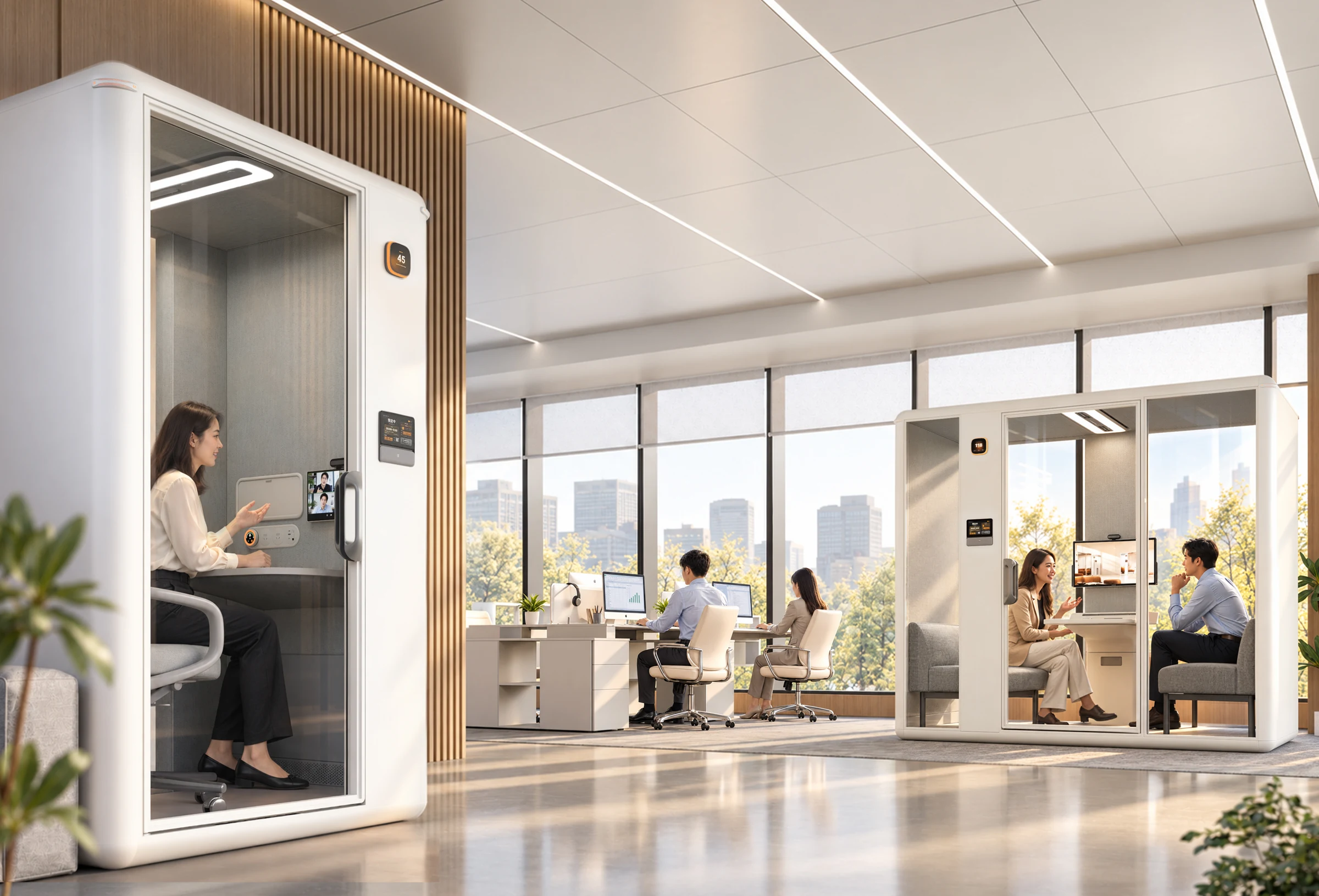
The MP brochure brings sound, light, power, air, smart operation and access into one design. Confirm each feature and its equipment scope for your chosen model.
Discover MPCustomers featured by MUSEPoD worldwide.





Look beyond a single feature and review how the selected configuration works as a whole.
Ask which acoustic test applies to your model and what its result measures. Speech reduction, interior absorption and surrounding office noise describe different parts of the experience.
Review airflow, lighting, seating and reach to controls together. Confirm equipment and operating requirements for the proposed location rather than assuming every option is standard.
A construction demonstration explains the system. Site access, delivery route, number of units and local services still determine the installation scope and programme.
Tell us how your space needs to work. We’ll help you find the right configuration.
Start your project